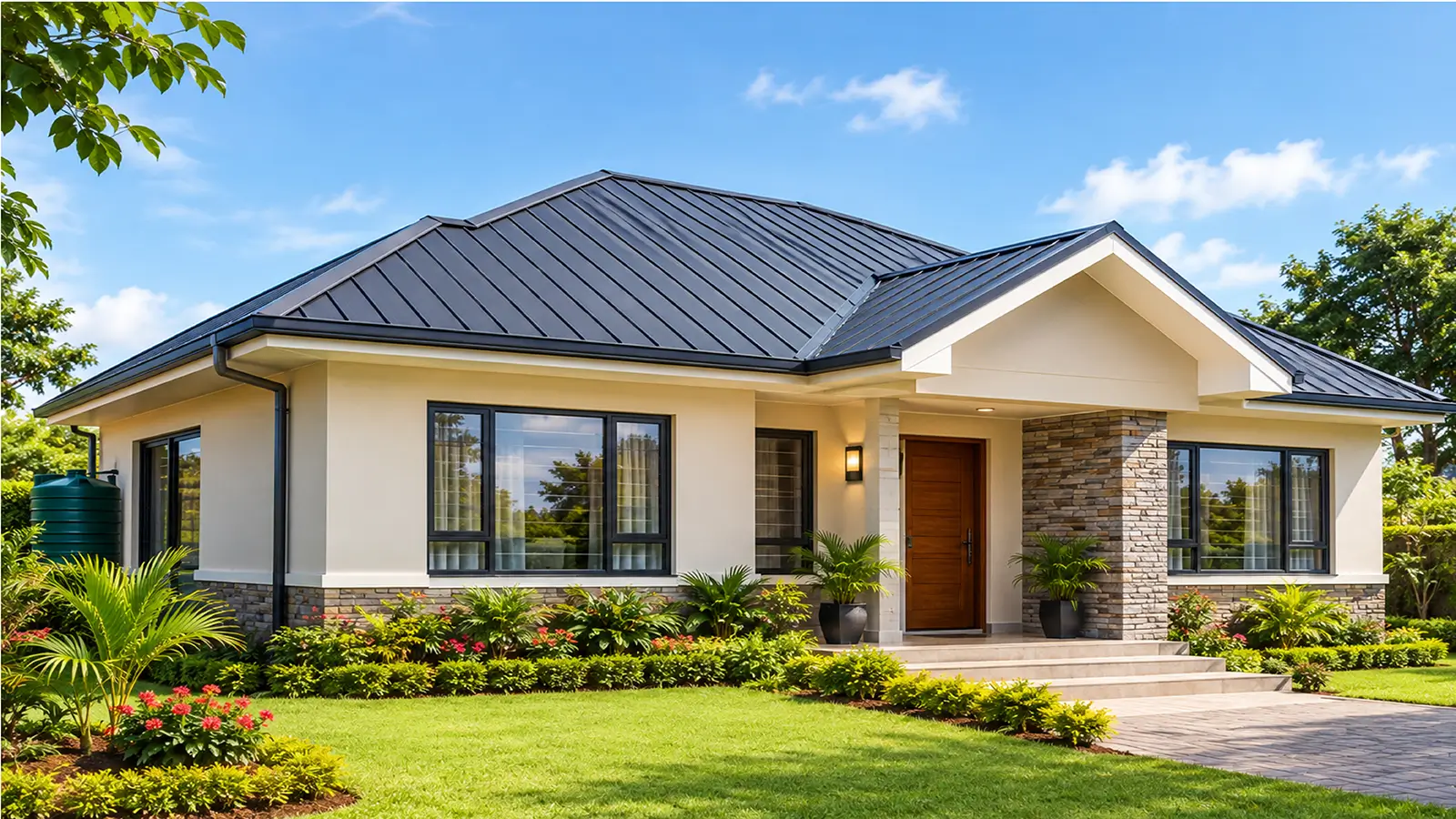
How to Reduce Heat from Mabati Roofing
Benard Karingithi
2026-10-05
A mabati roof protects your home from different weather conditions, but in hotter parts of Kenya, it can also affect indoor temperatures during the day. This can be especially noticeable in arid and semi-arid areas such as Garissa, Turkana, and Kajiado, as well as in coastal areas, where heat and humidity can make indoor spaces uncomfortable.
So, how do you reduce heat from a mabati roof? It starts with looking at the roof as a whole. Roof colour, reflective performance, insulation and ventilation can all help create a cooler and more comfortable indoor environment.
Here are some practical ways to reduce heat from your mabati roof:
1. Start With the Right Roof Colour
The colour of your roof can influence how much solar energy it absorbs. MRM’s Colorplus guide shows that lighter colours generally have higher solar reflectance than darker colours, which can help reduce heat absorption. Its Colorplus range also provides Solar Reflectance Index (SRI) information for different colours.
Solar Reflectance Index (SRI) is a measure that considers how much solar energy a surface reflects and how effectively it releases absorbed heat. In general, a higher SRI indicates that a surface can remain cooler when exposed to sunlight.
For homes in hotter climates, choosing a more reflective roof colour can therefore be one of the simplest steps towards cool roofing in Kenya.
You can explore MRM’s Colorplus roofing range for the available colours and learn more about its pre-painted roofing technology. If you prefer a textured finish, see the Colorplus Textured range, or consider Optima pre-painted steel as a cost-effective single-coat option.
2. Consider the Roof’s Reflective Performance
Colour is important, but it is only part of the picture. The roofing product and its coating also affect how the roof responds to sunlight. MRM’s technical information provides solar reflectance and Solar Reflectance Index (SRI) data for its Colorplus range, showing that different colours can have varying levels of reflectivity.
When choosing your roofing sheets, consider the product’s specifications alongside its colour rather than treating colour as the only factor. MRM’s online roofing shop lists roofing solutions by product type, colour, gauge, and thickness, helping you compare available products.
3. Use Saftherm Insulation
Even when a roof reflects some of the sun’s energy, heat can still transfer through the roofing system. This is where mabati insulation can make a difference.
MRM’s Saftherm Radiant Barrier is made from high-quality aluminium membranes and is designed to reduce radiant heat transfer between the outside and inside of a building. MRM says the material can reflect up to 97% of radiant heat and can also help with moisture, dust and energy efficiency.
In practice, this means Saftherm adds another layer between the hot roof and the living space below. Rather than relying entirely on the roofing sheet to manage heat, the insulation helps reduce radiant heat reaching the interior.
You can compare Saftherm 203 ECO, Saftherm 202 ECO and Saftherm 202 FR in MRM’s online shop.
4. Improve Airflow With Ventilators and Louvres
Reducing heat is not only about stopping heat from getting in. It is also about giving hot air a way to get out.
Good airflow design helps prevent hot air from becoming trapped in the roof space. Ventilators and louvres can support this by allowing air to move through the building and helping replace hot, stagnant air with fresh air.
MRM’s Ventilators and Louvres solutions include ridge and slope-mounted ventilators designed to exhaust stale air and replace it with fresh air entering through fixed louvres and other lower-level openings. You can also shop ventilators online.
The exact ventilation arrangement should suit the building, roof design and available openings. This is why ventilation is best considered during the planning stage rather than added as an afterthought.
5. Plan Your Airflow Before Installation
Good airflow starts with planning. MRM’s ventilation guidance notes that louvre installations should be treated as project-specific, so the position and number of vents and louvres should suit your building and roof design rather than follow a one-size-fits-all approach.
Work with your roofing professional to create an effective airflow path. The goal is simple: let fresh air in and give hot air a clear way out.
Plan for Comfort From the Start
There is no single answer to how to reduce heat from a mabati roof. Combining a reflective roof colour, suitable roofing performance, Saftherm insulation and Ventilators & Louvres can help manage heat and improve indoor comfort.
Whether you are building in a hotter or coastal area of Kenya, planning for heat from the start can help create a more comfortable home. To discuss your project, speak to MRM.

